The five-yearly is where fire systems are opened up, overhauled and proven, not simply looked at. Safe QLD scopes, programs, performs and certifies the full five-yearly across sprinkler, pumpset, hydrant, water storage, detection, EWIS, emergency lighting and passive fire, on live buildings, right across South East Queensland.
AS 1851-2012 layers its routines. The monthly confirms the system is in its normal standby condition. The six-monthly proves it can raise an alarm. The yearly tests performance against the design data. The five-yearly goes further than all of them: valves come apart, pipework is inspected internally, pumpsets are run against their duty point, batteries are capacity tested and every gauge is verified. It is the routine that proves the system will still work, rather than assuming it will because nothing looks wrong from outside.
That depth is exactly why it is the single biggest scheduled spend in a building's fire maintenance program, and why it should never arrive as a surprise invoice. The dates are known years in advance, the scope is defined by the standard rather than by opinion, and the work can be programmed, quoted and staged around your operation. With over 60 years of combined experience and a complete in-house team able to design, install, certify and maintain, Safe QLD carries out the five-yearly on every system in the building and takes responsibility for whatever it uncovers.
AS 1851-2012 AS 2118 Sprinkler AS 2941 Fire Pumpsets AS 2419 Hydrants AS 1670.1 Detection AS 1670.4 EWIS AS 2293.2 Emergency Lighting QBCC Licence 1143420
Standby condition confirmed. Valve positions, gauge pressures, water supply availability, panel and pumpset status. A visual routine, nothing is dismantled.
Alarm and signalling proved. Flow switches, alarm transmission to the panel and monitoring receipt, detector and warning system testing on rotation.
Performance tested against design. Water supply flow and pressure, full system inspection, records reviewed against the installed system for the occupier statement.
Overhauled and proven. Valves stripped and reseated, pipework inspected internally, pumpsets load tested, batteries capacity tested, every gauge verified or replaced.
Different systems carry different five-yearly obligations under different sections of AS 1851-2012 and their parent installation standards. This is what actually happens on site at the five year mark, and what those routines typically turn up in a building that has only ever had the shallower routines carried out.
| System | Standard | What happens at five years | What it usually finds |
|---|---|---|---|
| Fire Sprinkler Systems | AS 1851-2012 Section 2 · AS 2118 | Internal inspection of pipework. Alarm valve overhaul including seatings, face plate gaskets, washers and gland packing. Stop valves repacked, check valve seatings replaced, speciality valves overhauled, water operated local alarm serviced. Every pressure gauge verified against a calibrated test gauge or replaced. | Internal corrosion, scale and obstruction invisible from outside, alarm valves that will no longer seat cleanly, gauges reading well off true, and speciality valves that have not moved since commissioning. |
| Fire Pumpsets | AS 1851-2012 Section 3 · AS 2941 | Full performance test against the design duty point, with flow and pressure verified across the curve. Diesel engine and electric drive checks, controller and automatic start proving, alarm and fault signalling confirmed, and restoration to automatic on completion. | Pumps that will no longer make duty point, controllers that start on test but not on a genuine pressure drop, fault signals that never reach the panel, and pumpsets left off automatic by a previous attendance. |
| Fire Hydrants & Boosters | AS 1851-2012 Section 4 · AS 2419 | Overhaul of every valve including the booster assembly, with seatings, gaskets and washers replaced. Hydrostatic pressure testing of pipework, a fire brigade booster flow test, gauge verification, and block plan and signage checked against the installed system. | Seized and passing booster valves, corroded or leaking pipework, missing or unreadable block plans and signage, and boosters that cannot deliver what the brigade would expect on arrival. |
| Water Storage & Tanks | AS 1851-2012 Section 5 | Internal inspection and condition assessment of the tank, with level and low-level alarm proving so the loss of stored water is actually signalled. | Sediment, corrosion and coating breakdown inside the tank, level devices reading incorrectly, and low-level alarms that have never been proven to reach the panel. |
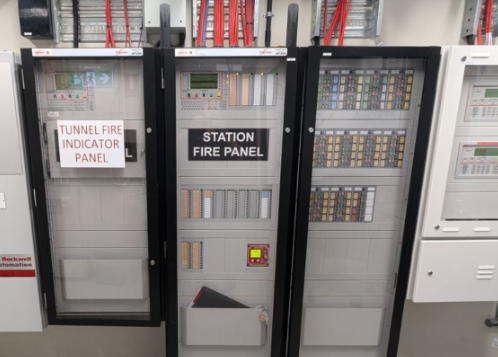
| Fire Detection & FIP | AS 1851-2012 Section 6 · AS 1670.1 | Full functional testing of the system, battery capacity testing, fault simulation, cause and effect re-verification, and condition assessment of the panel and field devices. | Batteries well past service life that pass a voltage check but fail under load, cause and effect logic altered during a fitout and never re-verified, and devices at the end of their working life. |
| EWIS & Occupant Warning | AS 1851-2012 Section 6 · AS 1670.4 | Full functional testing including evacuation tone and speech proving through the system, battery capacity testing, fault simulation, and confirmation that warning and intercom functions operate as designed on every floor and zone. | Zones that no longer sound, speech intelligibility lost behind a fitout, amplifiers and batteries at end of life, and warden intercom handsets that have never been tested since handover. |
| Emergency & Exit Lighting | AS 2293.2 | Full-rated-duration discharge test, battery condition assessed, luminaire and exit sign condition checked, with the result recorded against every individual luminaire rather than the building as a whole. | Fittings that light on a switch test but fail well short of the rated duration, failed and yellowed diffusers, dead batteries, and exit signs obscured or removed during fitout works. |
| Fire Doors & Passive Fire | AS 1851-2012 fire and smoke control features | Inspection and condition reporting across fire and smoke doors, hardware, seals, tags and penetrations, with findings recorded against each asset. | Doors that no longer latch or self-close, gaps and damaged seals, missing tags, and penetrations opened by other trades and never re-sealed. |

The exact scope for your building depends on the systems installed, their classification and the arrangement commissioned. Pumped systems, dry and pre-action sprinkler, special hazard suppression and combined sprinkler and hydrant installations all carry additional five-yearly items. We set the scope against your asset register and baseline data rather than applying a generic template, so you are quoting the routine your building actually has.

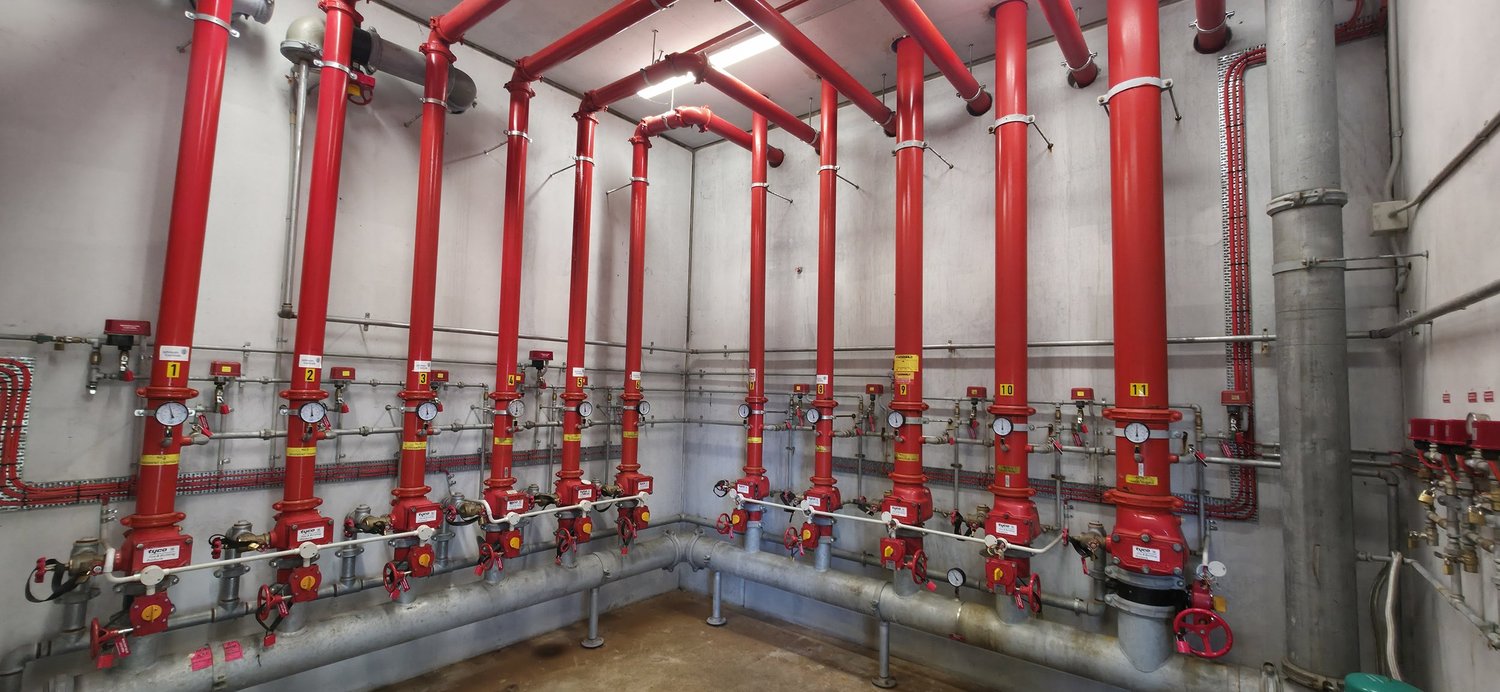
At five years the sprinkler system stops being a set of gauges to read and becomes a set of components to take apart. The alarm valve is opened and overhauled, the internal condition of the pipework is inspected, and every valve in the set is either serviced or proven to still seat.
Gauge verification alone changes the picture on a lot of sites. A monthly routine records the pressure a gauge displays. The five-yearly checks whether that gauge has been telling the truth for the last five years of records.

A pumpset that starts on a weekly run test has proved it can start. It has not proved it can deliver the flow and pressure the sprinkler or hydrant system was designed around. The five-yearly puts the pumpset under genuine load and takes readings across the curve.
This is where end of life is most often found. A pumpset that has quietly drifted below its duty point is a design shortfall on every system it feeds, and it is far better discovered on a programmed five-yearly than during an incident or a certifier's audit.

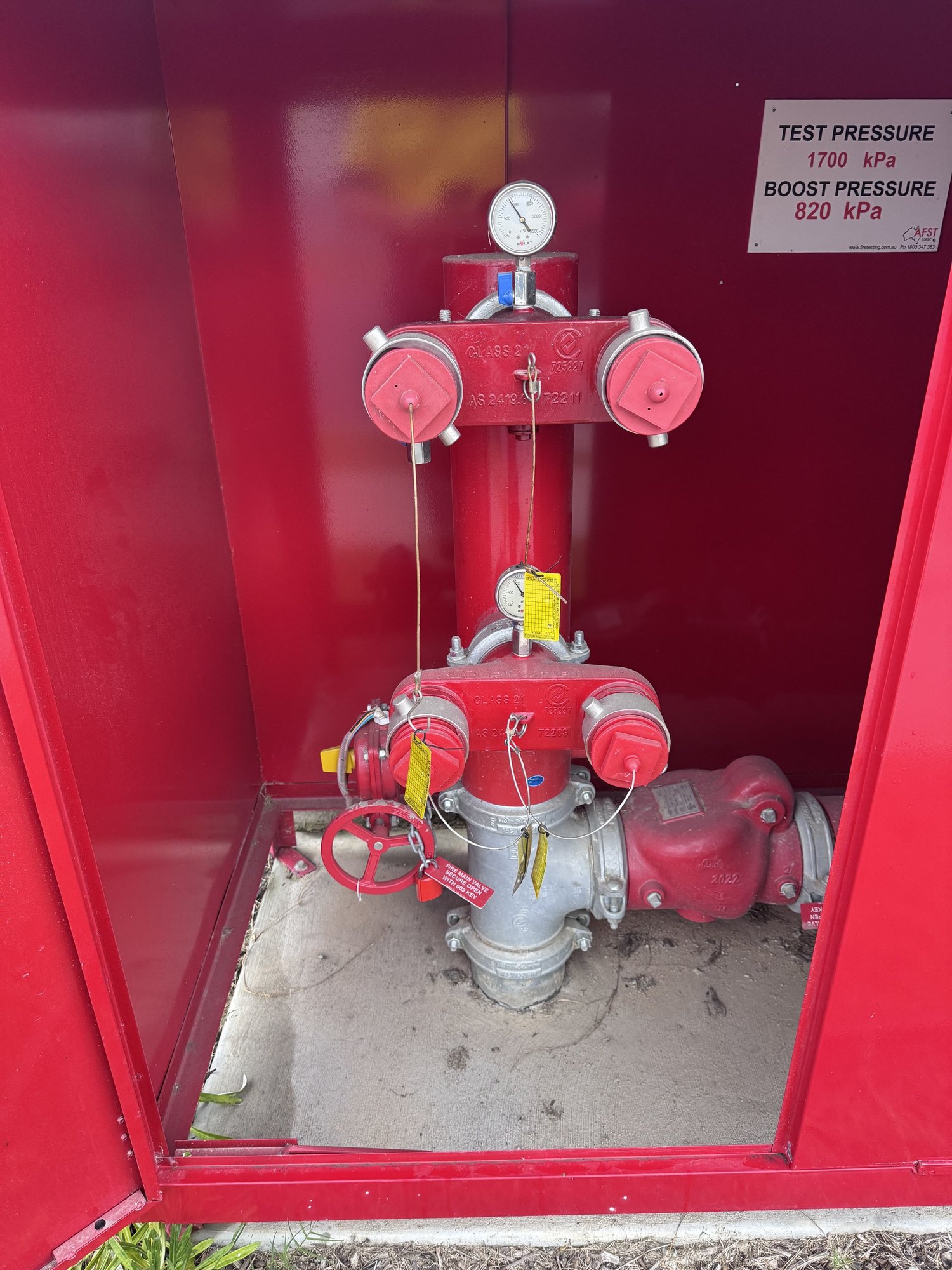
The booster is the point where the fire brigade connects to your building. If the valves are seized, the gauges are wrong or the block plan does not match reality, the problem surfaces at the worst possible moment. The five-yearly overhauls the assembly and pressure tests the system behind it.
Hydrant and booster work is coordinated with building management so street frontages, car parks and access ways are only occupied for as long as the test requires.
A five-yearly is not a sprinkler event. Every life safety system in the building carries its own deep routine, and each one produces records that your compliance position depends on. Safe QLD covers all of them under a single programme so the whole building falls due together rather than in six separate visits from four separate contractors.
Internal inspection and condition assessment of stored water supplies, plus level and low-level alarm proving so the loss of water is signalled and not simply discovered. Sediment, corrosion and internal coating condition are reported with the remaining service life in mind.
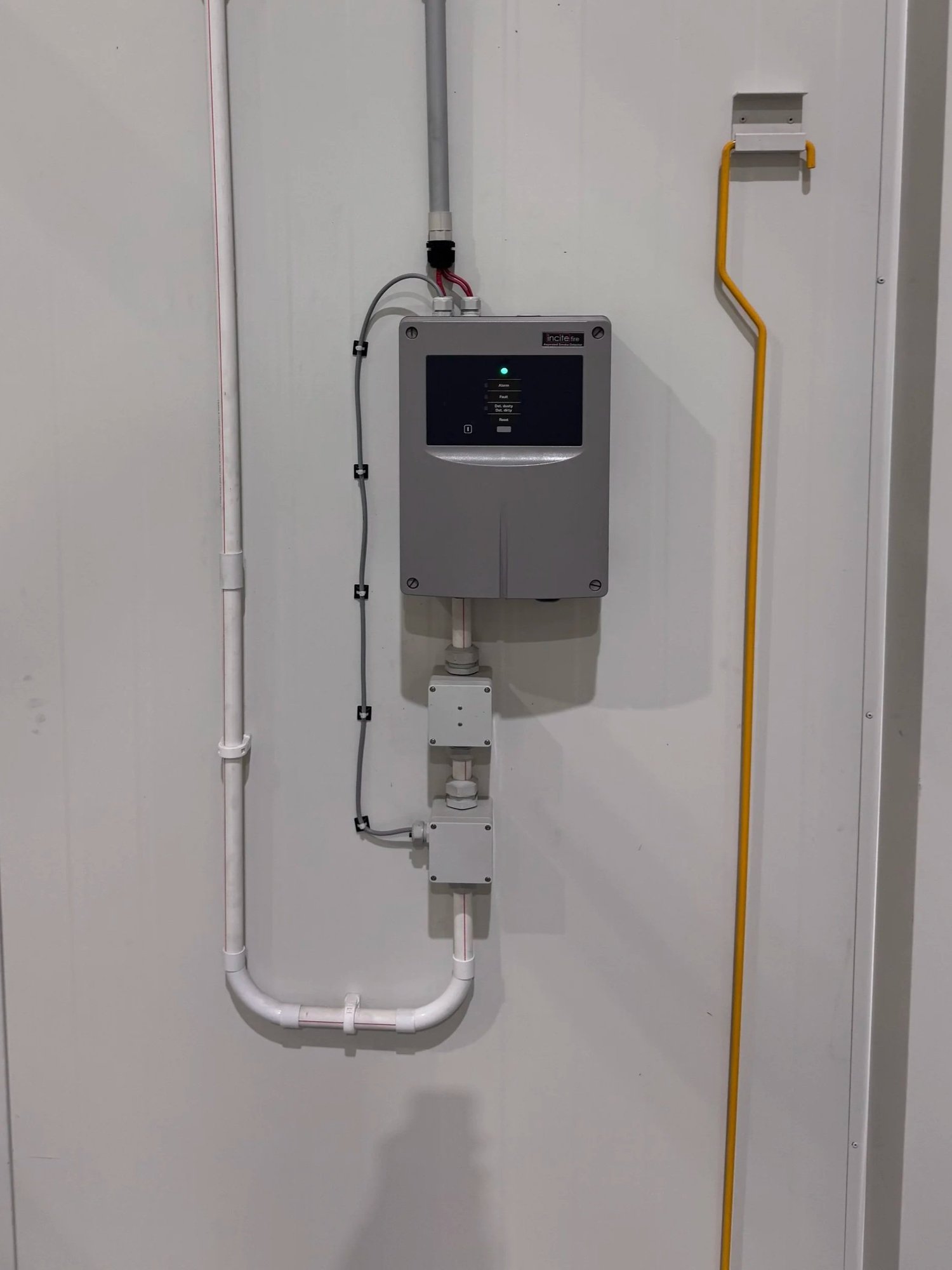
Full functional testing, battery capacity testing under genuine load, fault simulation and cause and effect re-verification, with panel and field device condition assessed. Our detection capability covers FIP, addressable and conventional systems, ASD and VESDA, Securitron and Wagner Systems.
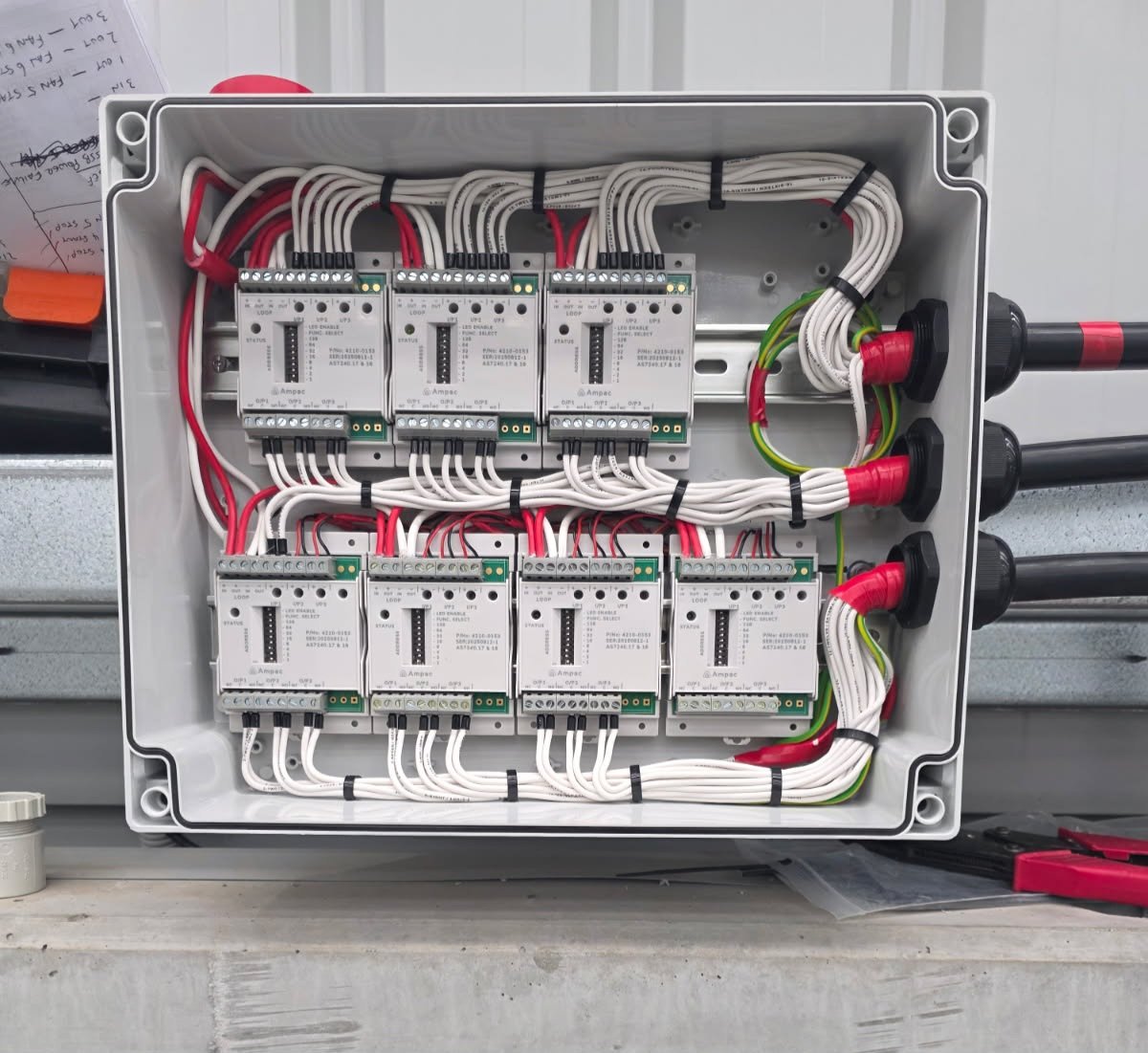
Evacuation tone and speech proved through the system floor by floor and zone by zone, amplifier and battery capacity tested, fault conditions simulated, and warden intercom functions confirmed. Programming changes are re-verified against the documented cause and effect.
A full-rated-duration discharge test under AS 2293.2, with battery condition, luminaire condition and exit sign condition assessed, and the result recorded against every individual luminaire so failures are identifiable by location rather than by building.
Inspection and condition reporting across fire and smoke doors, closers, latching, seals, tags and service penetrations. Passive fire is the system most often compromised by other trades, and the five-yearly is where that damage is documented properly.
Results recorded asset by asset, defects listed with a clear description and a quotation, baseline data reconciled against the installed system, and certification documentation issued in a form your certifier, insurer and head office can accept without argument.
A building that has only ever had monthly, six-monthly and yearly routines can look perfectly compliant on paper and still fail its five-yearly. The shallower routines are designed to confirm a system is in standby condition. They are not designed to find what is happening inside the valve, inside the pipe or inside the battery.
Five years of monthly records are only as reliable as the gauge they were read from. Verified against a calibrated test gauge, gauges that have quietly drifted reveal that the pressures on file were never the pressures in the system.
Alarm valves, check valves and speciality valves that have never been dismantled since commissioning. Seatings, gaskets, washers and gland packing degrade whether or not the valve is ever called on to operate.
A pumpset that starts every week has proven it starts. Run against its design duty point and across the curve, the same pumpset can fall short of the flow and pressure the system it feeds was designed around.
Panel, EWIS and emergency luminaire batteries hold a healthy voltage long after they have lost the capacity to run the system for its required duration. Only a capacity or full duration discharge test exposes it.
If the previous five-yearly cannot be produced from the logbook or the outgoing contractor, it cannot be evidenced, and the routine has to be treated as due. Missing baseline data has the same effect on the annual statement.
Fitouts, racking changes, tenancy splits and panel reprogramming that were never reflected in the block plans, the cause and effect or the baseline data. The system on site no longer matches the system on record.
We review the asset register, baseline data and previous records, identify which systems fall due and when, and issue a scoped, itemised quotation you can take to a committee or head office without a single line item marked as provisional.
A dated programme with a duration for each system, staged so trading hours, clinical lists, production runs, resident access and school terms are worked around rather than argued with. Out of hours where the routine cannot run during trade.
Every isolation notified to the monitoring provider and building management before the valve closes, kept to the smallest zone and shortest period practical, tagged, and watched for the duration of the impairment.
Valves stripped and reseated, pipework inspected internally and pressure tested, pumpsets run against duty point, batteries capacity tested, luminaires discharged for full rated duration, gauges verified, cause and effect re-proven.
Results recorded asset by asset, defects quoted, certification documentation issued, and every system returned to automatic, re-pressurised and proven back on with monitoring confirmed before we leave site.

There is no point pretending otherwise. The five-yearly costs more than a routine service, because valves are dismantled, pumpsets are load tested, tanks are opened, batteries are capacity tested and every luminaire is discharged for its full rated duration. Labour hours go up, plant and access requirements go up, and consumable parts are genuinely replaced rather than inspected.
What makes it manageable is that none of it is a surprise. The due dates are fixed by the date of the last routine, the scope is set by the standard, and the whole thing can be scoped, quoted and programmed into a capital or maintenance budget well ahead of the financial year it lands in. We would rather give you a defensible number twelve months out than an invoice you have to explain after the fact.
The genuine variable is what the routine uncovers. Finding a system at end of life during a five-yearly is common, not exceptional, and it is the honest reason to think carefully about who performs it. A contractor who can only test hands you a defect list and walks away. Because Safe QLD runs six in-house disciplines covering Design and Engineering, Drafting and Planning, Project Management and QA, Specialist Installation and Programming, Methodical Commissioning, and Service and Maintenance, the rectification, upgrade or full replacement is designed, installed, commissioned and certified by the same business that found it.

Almost every five-yearly we carry out is on a building that cannot close. Hospitals, aged care, shopping centres, cold stores, schools, self storage and apartment towers all keep operating while valves are being overhauled, so the impairment has to be managed rather than tolerated.
Our fleet of service and installation technicians works this way as standard across the region, and we are CM3 Prequalified with a QBCC Licence No. 1143420, so induction and prequalification requirements on managed sites are already satisfied.
AS 2118 sprinkler design, installation, commissioning and every level of AS 1851 maintenance, from wet and dry systems to in-rack and high-rise.
Explore sprinkler systemsPumped and un-pumped water supplies, AS 2941 pumpsets, tanks, boosters and hydrants tested, overhauled and upgraded across South East Queensland.
Explore water systemsMonthly, six-monthly, yearly and five-yearly routines scheduled across one site or an entire portfolio, with one reporting standard and one point of contact.
Explore maintenance contractsFast response across South East Queensland. Clear digital reports. Audit-ready compliance.